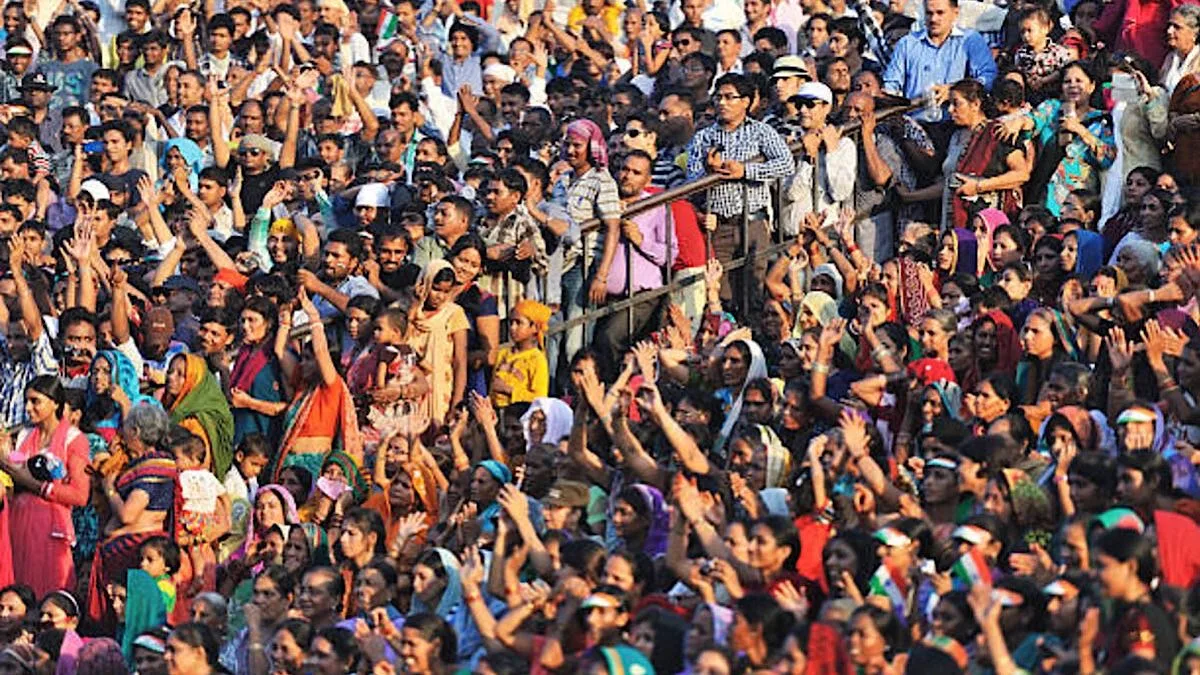
India is frequently celebrated as the world’s youngest major democracy. With more than half of its population below the age of thirty, the country possesses a demographic advantage that many developed economies can only envy. For years, this youthful population has been viewed as a source of economic dynamism, social innovation and political renewal. Yet beneath the optimistic rhetoric surrounding India’s demographic dividend lies a growing unease. Across cities, towns and villages, many young Indians are confronting a widening gap between aspiration and opportunity.
It is a disconnect that carries implications not only for economic growth but also for the health of India’s democracy. The aspirations of India’s youth have undergone a profound transformation over the past two decades. Expanded access to education, rapid digitalisation and unprecedented exposure to global ideas have reshaped expectations. Today’s young Indians are more connected, informed and ambitious than any previous generation. They have grown up in an era that promised mobility through education, prosperity through economic growth and empowerment through technology. Social media platforms have further expanded horizons.
Advertisement
A student in a small town can now observe lifestyles, career trajectories and opportunities across the world in real time. Success stories circulate widely, creating both inspiration and expectation. Education is increasingly viewed not merely as a means of personal development but as an investment that should lead to meaningful employment and upward mobility. However, aspirations have risen faster than opportunities. India remains one of the fastest-growing major economies, but economic growth alone does no t guarante e broad-base d employment. Many young people find themselves navigating a labour market characterised by intense competition, limited job security and skill mismatches.
While sectors such as technology, finance and digital services have created new opportunities, these gains have not been distributed evenly. For millions of graduates, the transition from education to employment remains uncertain and often frustrating. The challenge extends beyond unemployment statistics. Underemployment, precarious work and stagnant wages are equally significant concerns. Many young workers are employed in positions that do not fully utilise their qualifications or provide adequate economic security. Others cycle between temporary jobs, competitive examinations and skill-training programmes without achieving stable career outcomes. The recurring controversies surrounding recruitment examinations and public-sector vacancies have amplified frustration.
In a country where government jobs continue to symbolize stability and social mobility, delays, cancellations and allegations of irregularities often generate widespread dissatisfaction. Such episodes are not merely administrative failures; they affect public trust in institutions and shape perceptions of fairness. Education, long regarded as the principal pathway to advancement, is itself under scrutiny. Enrolment rates have improved significantly, and higher education has expanded rapidly. Yet concerns regarding quality, employability and relevance persist. Employers frequently report difficulties in finding candidates with the required skills, while graduates struggle to secure suitable employment. The result is a paradox in which educational attainment increases but economic outcomes remain uncertain.
This disconnect has broader social consequences. Young people who feel excluded from opportunities are more likely to experience anxiety, frustration and alienation. Mental health concerns among students and young professionals have received increasing attention in recent years. The pressures associated with competitive examinations, employment uncertainty and social expectations can be immense. Yet public conversations about youth well-being often remain overshadowed by purely economic discussions. The political implications of youth disillusionment deserve equal attention. Democracies derive strength from citizen participation and trust in institutions.
Young people who believe that institutions are responsive to their concerns are more likely to engage constructively in civic life. Conversely, prolonged exp eriences of exclusion or disappointment can foster cynicism and disengagement. India’s youth are not apathetic; they are increasingly vocal and politically aware. Digital platforms have created new avenues for expression, mobilisation and debate. Young citizens participate actively in discussions on governance, education, employment, climate change and social justice. They are willing to question authority and demand accountability. This engagement is a sign of democratic vitality. Yet there is also a risk that unmet expectations can produce disillusionment rather than empowerment.
When aspirations consistently encounter structural barriers, frustration may manifest in polarisation, distrust or withdrawal from democratic processes. Managing this transition is one of the most important challenges facing policymakers. The issue is not simply about creating more jobs, though employment generation remains essential. It is also about creating credible pathways to opportunity. Young people need confidence that effort, talent and education will be rewarded fairly. They need institutions that function transparently and predictably. They need systems that encourage innovation while protecting against exclusion.
Addressing these concerns requires a multidimensional approach. Economic policy must prioritise employment-intensive growth alongside productivity enhancement. Skill-development initiatives should be aligned more closely with evolving lab our-marke t re quirements. Educational reforms must focus not only on access but also on quality and relevance. Mental health support systems need greater attention, particularly within educational institutions. Equally important is the need to strengthen democratic responsiveness. Policymakers should view youth not merely as beneficiaries of development programmes but as stakeholders in governance.
Mechanisms for consultation, participation and dialogue can help bridge the gap between institutions and citizens. India’s demographic dividend remains a historic opportunity. Few countries have enjoyed such favourable demographic conditions while simultaneously benefiting from technological transformation and economic expansion. But demographic advantages are not self-executing. They require investments in human capital, institutional effectiveness and social inclusion. The central question is whether India can convert aspiration into achievement.
The answer will shape not only the country’s economic future but also the character of its democracy. A generation that is educated, connected and ambitious possesses enormous potential to drive progress. Yet potential alone is not enough. It must be matched by opportunities that allow young people to build meaningful lives and contribute to society. The writer is a civil engineer, consultant (invitee) to Rashtriya Raksha University under the Ministry of Home Affairs, and columnist.
(The views are personal. He can be reached at siddharth001.roy@gmail.com)